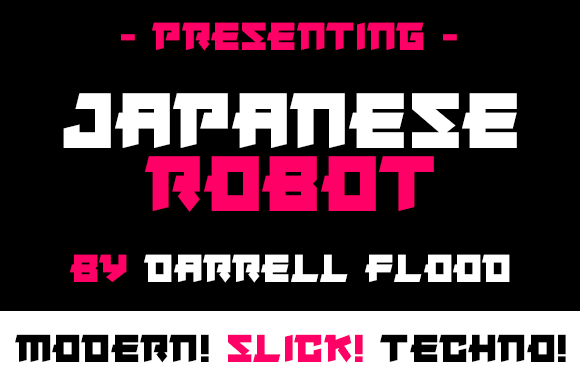
Japanese Robot: A Bold, Angular Font with Japanese Katakana Roots
Japanese Robot is more than just a font—it's a visual statement. Designed with the sharp, angular strokes of Japanese Katakana characters in mind, this typeface brings a futuristic, mechanical aesthetic to any design project. Whether you're working on a logo, website, or print material, Japanese Robot offers a unique blend of style and functionality that stands out in a crowded digital landscape.
What Makes Japanese Robot Unique?
At first glance, Japanese Robot might seem like a straightforward sans-serif font, but its design is rooted in the intricate geometry of Katakana. The result is a typeface that feels both modern and culturally rich. Each character is crafted with clean lines and deliberate angles, giving it a robot-like appearance that’s instantly recognizable.
The font’s structure is intentionally rigid, which makes it ideal for projects that require a sense of precision and control. Unlike softer, rounded fonts, Japanese Robot conveys a sense of strength and clarity, making it perfect for tech-related content, branding, or any application where boldness matters.
Key Characteristics of Japanese Robot
- Angular Design: Every letter is built with sharp corners and straight lines, mimicking the look of robotic structures.
- Katakana Influence: The font draws inspiration from Japanese Katakana, blending traditional script elements with a contemporary twist.
- High Legibility: Despite its sharp edges, Japanese Robot remains easy to read, even at smaller sizes.
- Versatile Use: Suitable for both digital and print formats, making it a flexible choice for designers and developers.
Practical Applications of Japanese Robot
Japanese Robot isn’t just a stylistic choice—it has real-world applications across various industries. For professionals in tech, marketing, or design, this font can be a powerful tool for creating visually striking content that resonates with audiences.
In the world of branding, Japanese Robot can help businesses establish a strong, memorable identity. Its mechanical feel aligns well with companies in the tech, gaming, or innovation sectors looking to convey a sense of progress and reliability.
Use Cases Across Different Fields
- Web Design: Japanese Robot works well for headings, buttons, or call-to-action elements where visual impact is key.
- Print Materials: From brochures to packaging, this font adds a modern edge to physical media.
- Logo Creation: Its distinctive look makes it an excellent choice for logos aiming to stand out in competitive markets.
- Content Presentation: Bloggers and educators can use it to highlight important points or create a more dynamic layout.
Why Choose Japanese Robot Over Other Fonts?
When selecting a font, it's essential to consider how it aligns with your goals and audience. Japanese Robot offers several advantages that make it a compelling choice:
- Distinctive Visual Identity: It helps differentiate your work from others using more common typefaces.
- Cultural Relevance: For projects targeting Japanese or Asian markets, it adds authenticity and local flavor.
- Emotional Impact: The font’s rigid, mechanical appearance can evoke feelings of trust, efficiency, and innovation.
Unlike many generic fonts, Japanese Robot doesn’t blend into the background. It demands attention, which can be a major asset when trying to capture user interest or reinforce a brand message.
Best Practices for Using Japanese Robot
To get the most out of Japanese Robot, it’s important to use it strategically. Here are some tips for effective implementation:
- Limit Usage: Due to its bold nature, it’s best used sparingly—such as in headlines or subheadings rather than body text.
- Pair with Complementary Fonts: Combine it with a simpler, more readable font for balance and contrast.
- Test for Readability: Ensure it looks good on different devices and screen sizes before finalizing your design.
- Consider Context: Think about whether the font aligns with the tone and purpose of your project.
Japanese Robot in Action: Real-World Examples
Several brands and designers have successfully incorporated Japanese Robot into their work. For instance, a tech startup might use it for their website’s main title to signal innovation and forward-thinking. A gaming company could apply it to promotional materials to emphasize a high-energy, futuristic theme.
Even in educational settings, Japanese Robot can be useful. Teachers or course designers might use it to highlight key concepts or create engaging presentations that capture students’ attention.
Final Thoughts on Japanese Robot
Japanese Robot is more than just a font—it’s a design choice that carries meaning and intention. Its angular, robot-like appearance makes it ideal for projects that need to stand out, communicate strength, or connect with specific cultural or thematic elements.
Whether you're a designer, marketer, educator, or business owner, Japanese Robot offers a versatile and impactful way to enhance your visual communication. By understanding its strengths and limitations, you can use it effectively to elevate your work and engage your audience in new ways.